
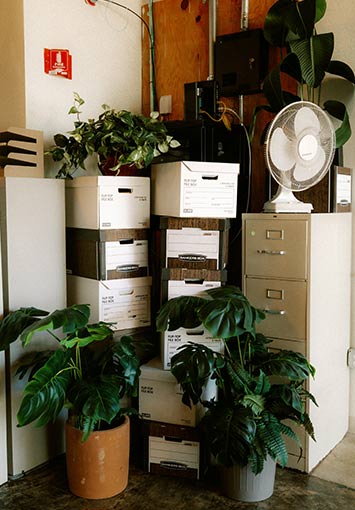
It’s easy to look at the rows of filing cabinets lining your office and think “free storage”. After all, you bought the cabinets years ago, and there is still space inside them to spare. But in 2026, with average commercial rent hovering around $35 per square foot, that space carries a real and ongoing cost for your business.
Most people don’t really think about the floor space those cabinets occupy. But every square foot inside an office comes with rent, utilities, and overhead attached to it. With filing cabinets continuing to take up that space year after year, you can see how the cost of storing paper can really add up.
In this article, we will take a closer look at the real cost of storing paper records and how document scanning can help businesses reclaim expensive office space.
The High Cost of Storing Paper
Commercial office space carries a measurable cost per square foot. Even in markets where vacancies have increased, the price of well-maintained and secure office space continues to rise. In 2026, mid-range office space in the U.S. averages roughly $32 to $35 per square foot annually. In premium markets such as Manhattan or San Francisco, that number can easily exceed $60 to $80.
When you apply those numbers to a row of filing cabinets, the cost becomes easier to understand. A standard lateral filing cabinet requires more room than its physical footprint suggests. In addition to the cabinet itself, space is needed to open the drawers and allow someone to stand in front of the file while accessing records.
Most offices we’ve worked in over the last 23 years allocate somewhere around 15 to 17 square feet per cabinet when this working space is included. At an average office rate of $35 per square foot, that means a single filing cabinet is consuming roughly $525 to $595 of office space every year. In higher-cost markets, that same cabinet can represent well over $1,000 in annual real estate costs.
We call this the “Cabinet Tax.” It’s an expense that many businesses never calculate, yet the cost exists every month as part of the rent. It’s essentially an invisible tax on your office space—one that continues for as long as the paper stays on-site.
Physical Storage Vs. Digital Records: Cost Comparison
Once records are digitized, the cost structure changes significantly. Instead of continuing to pay for the privilege of housing physical paper year after year, scanning converts your archive into searchable digital files that fit onto your existing secure servers or cloud systems.
Physical Storage (On-Site)
- Annual Cost: $500 to $1,200+ per cabinet in floor space and utilities.
- Search Time: Staff may spend 15–20 minutes locating and refiling a single document.
- Privacy Risk: Files are vulnerable to anyone with physical access to the room.
- Space Impact: Cabinets consume square footage that could be used for revenue-generating work.
Digital Records (After Scanning)
- Annual Cost: No recurring cost tied to office floor space.
- Search Time: Files are located in seconds via keyword search.
- Privacy Protection: Access is controlled through encrypted permissions and audit logs.
- Space Impact: Office space is reclaimed for active, collaborative use.
While scanning involves a one-time project cost, most businesses find that the real estate savings alone provide a clear return on investment. Once the transition is made, digital records are significantly cheaper to store and maintain over the long term.
Try Our Calculator: If you aren’t sure where to start, you can use our scanning cost calculator to estimate the volume of records you have in storage and compare the costs of physical storage versus a digital conversion.
Beyond the floor space savings, moving away from paper helps you save elsewhere by reducing the likelihood of security breaches and ensuring you stay ahead of complex compliance issues. By shifting your records to a secure digital environment, you aren’t just saving on square footage, you’re adding a layer of protection that a filing cabinet simply can’t provide.
How SecureScan Helps Businesses Reclaim Their Space
Many of our customers are rethinking how their workspace is organized, and now you can too. Rooms once dedicated to paper storage can be converted into collaborative areas, additional workstations, or meeting spaces. Digitizing records allows you to reclaim wasted office space and use it for more productive purposes. In some cases, reducing your physical storage requirements can even allow a business to downsize their footprint when the opportunity arises.
With the right partner in your corner, taking your space back is easier and more affordable than you might think. At SecureScan, we have spent more than 23 years helping businesses convert paper records into organized, searchable digital records. Our professional document scanning services include preparation, high-speed scanning, OCR text recognition, and indexing, so files can be located quickly when needed.
The result is an archive that is easier to manage while also freeing up office space that was previously used for filing cabinets. Contact us for more information or get a free quote for your next scanning project from one of our technicians today.