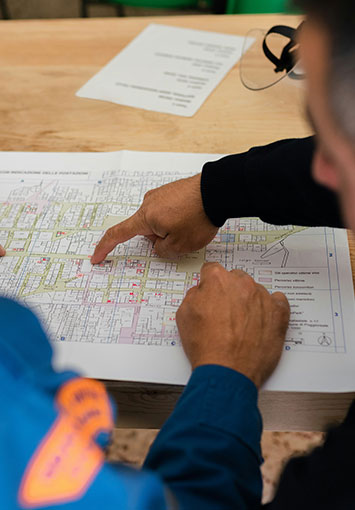
While most engineering and manufacturing work now starts digitally, using CAD and other design software, many engineers still rely on older drawings created long before digital tools were standard. Many of these designs represent active equipment, structures, and systems that are still in use today. In some cases, they may be the only record of the original design, detailing how something was built, modified, or intended to function.
Organizing and storing these drawings on paper can be challenging, especially given their size. Engineering drawings are often oversized, which means they take up a significant amount of space and require storage in tubes, flat files, or map cabinets. Over time, these collections grow, and locating a specific drawing becomes more difficult than it should be.
When a design is needed to address a repair, manufacture replacement parts, or redesign existing equipment, finding the original drawings shouldn’t stand in the way. Delays caused by misplaced or hard-to-access plans can slow projects and create unnecessary friction.
Scanning engineering drawings provides a way to preserve these documents while improving their overall usefulness. Digitization makes drawings easier to access, share, and work with, helping bridge the gap between paper archives and modern engineering needs. From reference and collaboration to reengineering and long-term protection, digitized drawings support ongoing work without the limitations of physical storage.
Preserving Engineering Drawings Is Well Worth the Effort
Preserving engineering drawings takes time, attention, and resources, but the payoff is well worth the investment, especially later down the line when these documents are needed to support ongoing work. Even as new designs are created digitally, older drawings continue to provide critical information about equipment, facilities, and systems that remain in service.
Maintenance and Repairs
Engineering drawings often contain the details needed to service long-standing equipment and infrastructure. Dimensions, tolerances, and original design notes help maintenance teams understand how components fit together and how they were intended to function.
When this information is easy to access, repairs can move forward with greater confidence and fewer delays, especially when dealing with custom or aging equipment.
Manufacturing Replacement Parts
Older machinery frequently relies on components that are no longer readily available. In these situations, original drawings may be the only reliable reference for producing replacement parts.
Clear, accurate drawings allow manufacturers to recreate parts that meet original specifications, reducing trial and error and helping avoid costly rework.
Modifications, Retrofits, and Reengineering
Preserved drawings provide a foundation for redesign and upgrade projects. Engineers use them to understand existing layouts, material choices, and constraints before making changes.
Having access to original plans helps teams evaluate how updates will affect surrounding systems and supports more informed design decisions.
Documentation and Verification Needs
Engineering drawings may also be required for inspections, audits, insurance reviews, or internal documentation. These requests often come with little notice, making quick access especially important.
Engineering Drawings Are Difficult to Manage
Working with paper-based drawings leads to problems that often only surface as collections grow. Oversized formats and specialized storage make these drawings harder to organize and access than many other types of records. What works for a small set of drawings can quickly become difficult to maintain as collections expand and older plans remain in circulation.
These issues are rarely the result of poor planning. They reflect the reality of working with oversized documents that were never designed for long-term, shared access. Tasks like retrieving specific drawings, confirming details, or sharing information can take more time than expected, especially when those drawings are needed to support active work.
Space and Storage Constraints
Engineering drawings are oversized, which makes them much more difficult to store than typical records. Flat files, map cabinets, and storage tubes take up significantly more floor space, especially as collections expand. For some firms, these storage systems spread across multiple rooms or buildings, making centralized access difficult.
As space becomes limited, drawings may be packed tightly, stacked, or relocated to off-site storage. While these solutions address immediate space concerns, they often make retrieval slower and less predictable.
Organization and Indexing Issues
Paper drawings are only as useful as their labeling and filing systems. Over time, inconsistent naming conventions, handwritten notes, and faded titles make it harder to identify the correct drawing. Multiple revisions may exist, but without clear version control, it can be difficult to know which plan reflects the most current information.
When drawings are filed under different project names, dates, or internal references, searching for a specific document often relies on institutional knowledge rather than a reliable system.
Limited Access and Sharing
Physical drawings can only be accessed by one person at a time and only from the location where they are stored. This creates delays when multiple teams need to review the same plans or when outside partners require access.
Copying large-format drawings for distribution introduces additional costs and risks, especially when originals need to be handled repeatedly. Each handoff increases the chance of misplacement or damage.
Time Sensitivity When Drawings Are Needed
Engineering drawings are often needed under time pressure. Repairs, maintenance work, and fabrication projects depend on accurate information, sometimes with little notice. When locating a drawing turns into a search across cabinets or storage facilities, valuable time is lost before work can even begin.
These delays can impact schedules and increase costs, particularly when work is paused while teams wait for access to original plans.
Scanning Engineering Drawings Makes It Easier
Once engineering drawings are scanned, many of the headaches tied to working with paper begin to fade. Oversized formats, limited access, and time-consuming searches give way to a more usable system that supports ongoing work without changing how the information itself is used.
Scanning converts paper drawings into digital files that are easier to organize, retrieve, and share. Instead of relying on physical storage and manual filing, teams can locate specific drawings through searchable filenames, metadata, or project references. This shift alone removes much of the friction involved in tracking down the right document.
Digitized drawings also support broader access without added complexity. Multiple people can view the same file at the same time, whether they’re working on-site or off-site. This makes it easier to coordinate reviews, respond to questions, and keep work moving without waiting on physical handoffs.
Taken together, these improvements change how drawing collections function in practice. The information remains the same, but access is faster, collaboration is easier, and reliance on physical storage is reduced. This sets the stage for more advanced uses, including conversion, reengineering, and long-term digital management.
SecureScan Makes Taking the Next Step Easier
Large-format drawings come with their own set of requirements, and experience matters when accuracy and clarity are non-negotiable. SecureScan has more than 23 years working with oversized engineering drawings, blueprints, and technical plans, projects where detail, consistency, and care make all the difference.
Engineering drawings contain fine linework, symbols, annotations, and precise measurements that must be captured clearly to retain their full value. Each drawing is scanned using professional large-format systems designed to preserve these details at up to 1200 dpi, followed by a manual review process to confirm clarity and completeness. This 100 percent manual inspection policy ensures that the digital files we create during the scanning process are ready for reference, sharing, and any future processing that may be required.
For teams managing valuable drawing collections, having a reliable partner like SecureScan in your corner helps remove uncertainty and stress from the process. We work closely with each client to understand how drawings are used today and how they may be needed in the future, allowing scanning projects to be approached with the right level of care and attention.
To learn more or discuss your large format scanning project, reach out to speak with one of SecureScan’s technicians or request a quote. Getting clear guidance early can help ensure engineering drawings are digitized accurately and ready to support ongoing work for years to come.